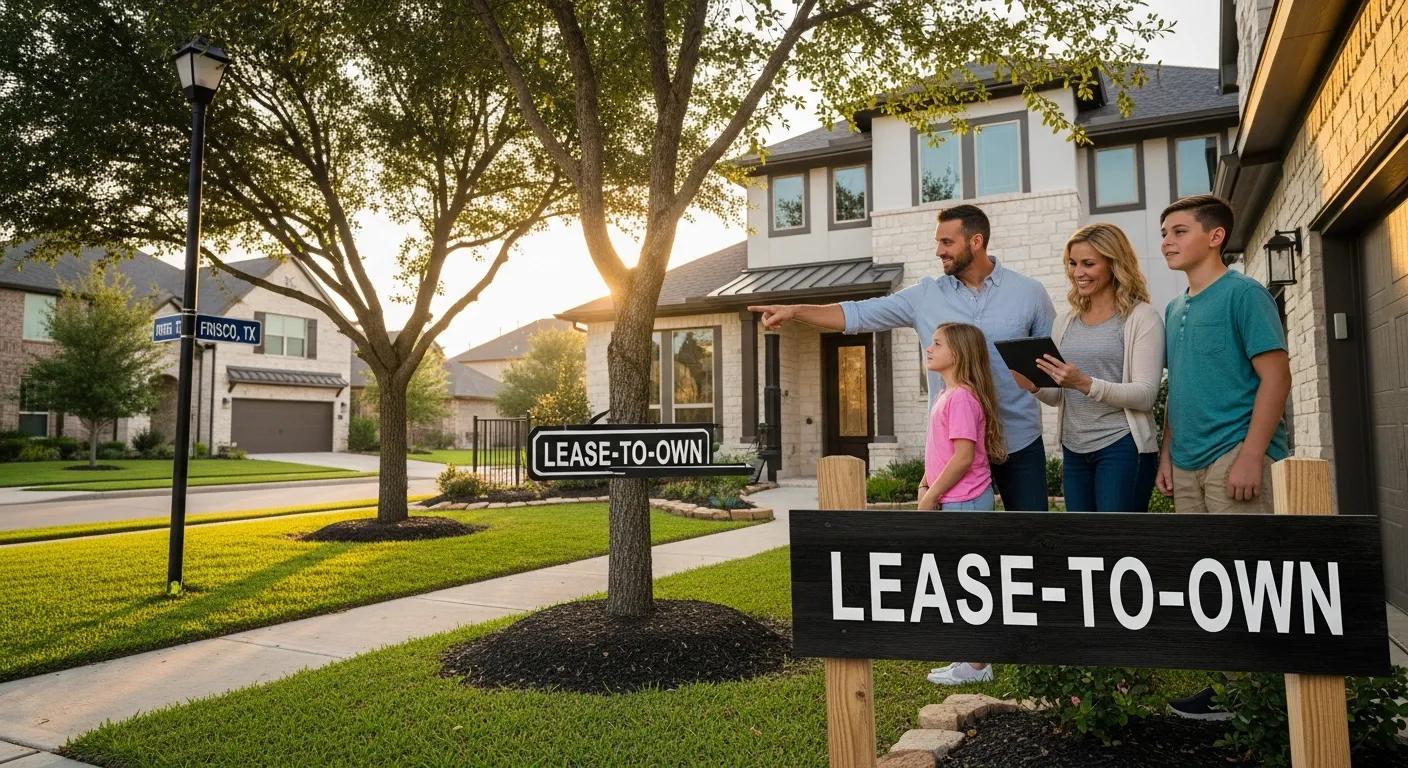
Lease-to-Own Homes in Frisco TX: Complete Guide
Lease-to-Own Homes in Frisco TX: Your Complete Guide to Flexible Homeownership
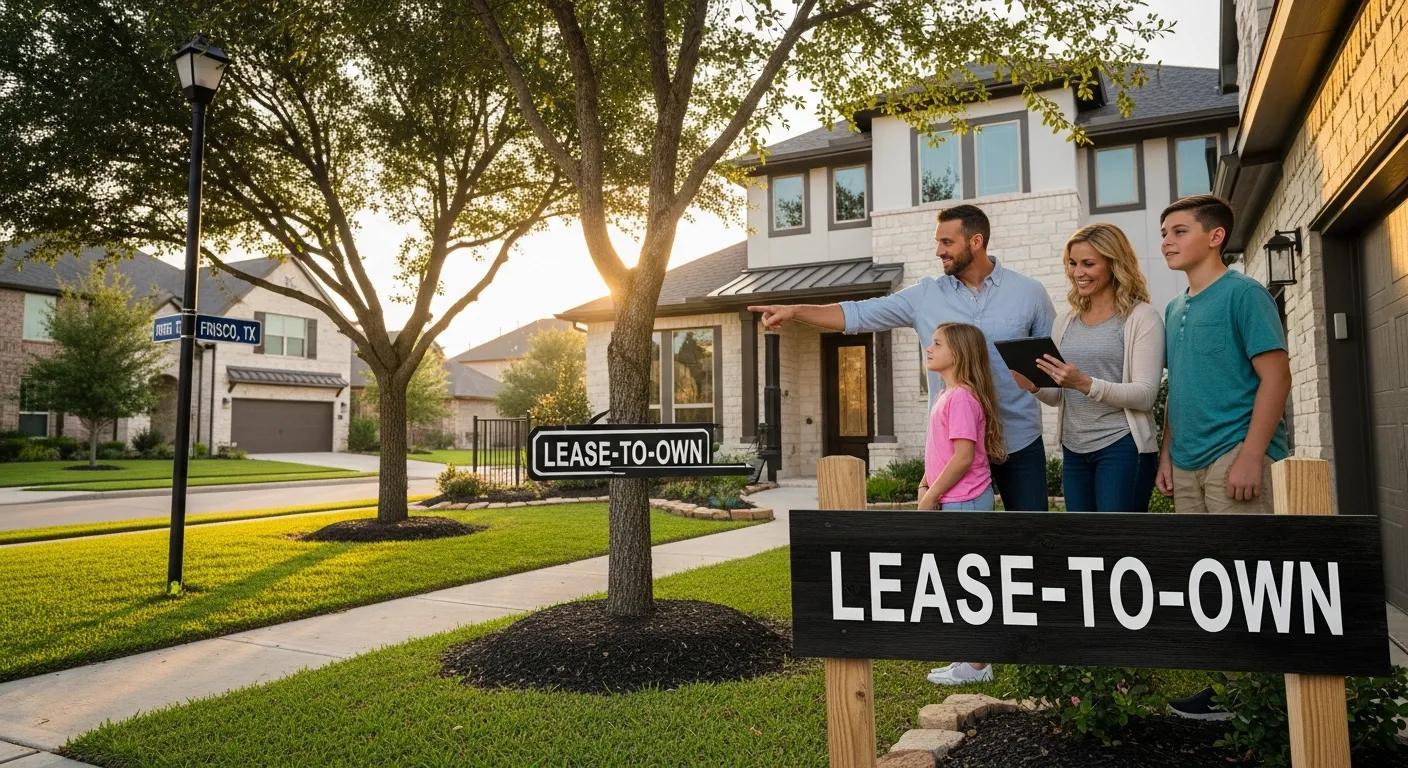
Thinking about buying a home in Frisco, TX, but feeling like the traditional path isn't quite right for you yet? You're not alone! Lease-to-own homes offer a truly practical and flexible way to step into homeownership, especially if you need a little more time to boost your credit score, save up for that down payment, or simply want to lock in a great purchase price while you're already living in your dream home. This guide is designed to be your friendly companion, walking you through how lease-option and lease-purchase agreements actually work here in Frisco. We'll break down the entire process, step-by-step, chat about what it takes to qualify, and even compare lease-to-own with other options like traditional mortgages and owner financing. You'll learn all about rent-credit and option fees, what your lease term will look like, which Frisco neighborhoods are buzzing with lease-to-own opportunities, and how to get ready for closing day. We've even included some handy checklists, comparison tables, and example calculations to make your decision-making as straightforward as possible. My goal is to connect the unique Frisco market—from neighborhoods to schools—with actionable next steps, using clear terms like lease-option agreement, rent-credit programs, and option fee, so you feel confident and informed every step of the way.
What Is a Lease-to-Own Home in Frisco TX? Understanding Lease-Option and Lease-Purchase Agreements

Imagine finding a home you love in Frisco, moving in, and knowing that your rent payments are actually helping you buy it down the road. That's the magic of a lease-to-own home! It's an alternative homebuying program that cleverly combines a rental period with a future right (or even an obligation) to purchase. Essentially, you get to live in the home while you build up credits or fulfill the conditions to buy it. This model typically comes in two main flavors: a lease-option agreement, which gives you the *right* (but not the obligation) to buy, and a **lease-purchase agreement**, which creates a stronger *obligation* to purchase once your lease ends. Both structures usually involve an option fee, a set lease length, monthly rent (often with a special rent-credit component), and a predetermined purchase price or a clear method for figuring it out. Getting a handle on these contract elements is key to managing your timeline, getting your finances ready, and understanding your risks. It also clarifies how those rent payments can genuinely contribute to your future equity. Let's dive deeper into these two contract types and unpack some crucial terms like option fee, down payment contribution, and lease length.
Knowing the ins and outs of these different lease-to-own formats is so important because they really change your obligations and protections as a buyer. A clear comparison will definitely help you pick the right path for your unique situation.
| Agreement Type | Characteristic | Typical Effect |
|---|---|---|
| Lease-Option Agreement | You, the tenant, have the *option* to buy; the seller keeps final ownership until you decide to exercise that option. | This gives you fantastic flexibility to walk away if things don't align; your option fee is often credited toward the purchase if you do decide to buy. |
| Lease-Purchase Agreement | You're contractually *obligated* to buy the home at the end of the lease term. | This means less flexibility, but it gives the seller more certainty and often involves larger upfront commitments, like a bigger option fee. |
| Rent-Credit Programs | A specific portion of your monthly rent is set aside as a credit toward your eventual purchase. | This is a game-changer! It reduces the cash you'll need at closing, as long as it's clearly documented and enforceable in your agreement. |
How Do Lease-Option and Lease-Purchase Differ in Frisco?
The biggest differences between lease-option and lease-purchase agreements really come down to your obligation as a buyer and your negotiation power, which, as you can imagine, impacts your financial planning and legal safeguards. With a **lease-option**, you'll pay a non-refundable option fee for the exclusive right to purchase the home within a specific timeframe. The beauty here is that you can walk away at the end of the lease if, for example, your financing isn't quite secured yet. On the flip side, a **lease-purchase** often legally binds you to complete the sale when the lease ends. This usually means stronger upfront commitments, like a larger option fee or a more explicit down payment delivery. For Frisco buyers, we typically see lease lengths ranging from 1 to 3 years, and option fees commonly fall between 1% and 3% of the agreed purchase price, or sometimes it's a flat amount negotiated on a case-by-case basis. Understanding these nuances is crucial for local buyers to negotiate terms that give them flexibility while steadily working towards being ready for financing.
Getting these contract distinctions clear in your mind naturally leads us to the next critical topic: the specific contract terms you'll need to negotiate and make sure are well-documented.
What Are the Key Terms: Option Fee, Down Payment, and Lease Length?
Think of the option fee, down payment contribution, and lease length as the essential building blocks of your lease-to-own contract. They're what determine how costs are allocated, how committed the seller is, and how much time you have to prepare for your purchase. The **option fee** is what secures your right to purchase, and it's usually non-refundable. However, in many agreements, it gets applied directly against the purchase price if you do exercise your option – which is a fantastic benefit! **Down payment commitments** can be structured in a few ways: as additional credits or as separate funds you'll bring to closing. Some contracts even specify that a portion of your monthly rent will accrue as a "rent-credit" to be applied toward your down payment. And then there's **lease length**, which is super important because it dictates how much rent-credit you can accumulate and how much time you have to qualify with a mortgage lender. Common terms are 12, 24, or 36 months. My advice? Always negotiate for clear language on how your rent-credit is calculated, what documentation you'll need for those credits, and what happens to your option fees if, for some reason, the sale doesn't close.
Having clear definitions of these terms will truly prepare you for the practical steps involved in moving from a lease agreement to being fully ready for a mortgage.
How Does the Lease-to-Own Process Work in Frisco TX? Step-by-Step Guide
The lease-to-own process in Frisco, TX, might seem like a lot to take in, but trust me, it follows a very predictable and manageable sequence. Think of it as a clear roadmap: first, you search for and select your property, then you apply and qualify, next comes the option execution and lease commencement, followed by a period of rent-credit accumulation and financing preparation, and finally, you exercise your option and close! This organized approach is designed to help you manage your timeline expectations and keep track of all your documents. Each step has its own specific paperwork and outcomes: for example, initial property qualification will require your ID and proof of income; executing the option means an agreed option fee and a signed contract; during your lease term, you'll want to diligently track your rent-credit receipts and actively pursue loan pre-approval; and finally, exercising your option and closing will involve mortgage underwriting, an appraisal, and the exciting transfer of ownership. Understanding these phases really helps reduce any uncertainty and makes coordinating with lenders and legal counsel (if you choose to use them) much smoother.
Below is a practical, numbered list that outlines the core steps and typical timelines for you to follow. It's your personal checklist!
- Search for Your Perfect Home: Start looking for suitable lease-to-own properties and create a shortlist of homes that truly fit your price range and neighborhood priorities.
- Apply and Qualify: Submit your application materials, including your ID, recent pay stubs, and rental history, for the owner/seller to review.
- Negotiate and Sign: This is a big one! Negotiate and sign your lease-option or lease-purchase agreement. Make sure it clearly includes the option fee, rent-credit terms, and the method for determining the purchase price.
- Make Payments & Track Credits: Pay your option fee and begin your monthly rent payments. Crucially, keep meticulous documentation of your rent-credit tracking.
- Prepare for Financing: During your lease term, actively pursue lender pre-approval. If needed, work on improving your credit score and diligently save up any remaining down payment funds.
- Exercise Option & Close: If you have a lease-option, exercise it! Then, complete your mortgage underwriting and close on the property with your final purchase funds. Congratulations, you're a homeowner!
These steps give you a realistic timeframe: your initial search and selection might take 1–3 months, and lease terms commonly span 1–3 years. Remember, the follow-up actions during your lease, like credit improvement and pre-approval, are vital to ensure a timely and smooth closing.
Here’s a short table to clarify each process step, its typical timeline, and what you can expect to achieve, helping you plan effectively.
| Process Step | Typical Timeline | Expected Outcome |
|---|---|---|
| Property Search | 1–3 months | A solid shortlist of candidate homes you love |
| Application & Qualification | 1–4 weeks | Approval to move forward and execute your agreement |
| Lease & Option Execution | Immediate at signing | Option fee paid; your lease officially begins |
| Lease Term / Credit Accumulation | 12–36 months | Rent-credit accrues; you're actively preparing for financing |
| Exercise & Closing | 30–60 days after exercise | Mortgage underwriting completed and property ownership transferred! |
Alice D. Ware is here to support buyers through many of these steps. They can offer application assistance, guidance on structuring your lease, and even help with closing coordination to ensure all your documentation is clear and your credits are trackable. Their role is truly service-oriented—focused on helping you qualify, structure agreements, and prepare for lender review—so you can concentrate on those important credit and savings milestones.
Who Qualifies for Lease-to-Own Homes in Frisco? Eligibility and Financial Requirements
Let's talk about who lease-to-own programs in Frisco are really designed for. Typically, they're perfect for buyers who might be facing some credit challenges, are diligently saving for a down payment, or simply need a bit more time to meet traditional lender qualification standards while still securing a home they love. While qualification criteria can vary from seller to program, you'll commonly find requirements like a minimum credit score (often starting around 580 for many programs), a stable and verifiable income that's enough to comfortably cover rent and living expenses, and some cash on hand for the option fee plus initial reserves. Lenders and sellers will also look at your debt-to-income ratios, employment history, and your rental payment history. My experience tells me that strong documentation, a history of timely rent payments, and showing clear progress in your savings significantly increase your chances of a successful transition to mortgage financing. So, get those pay stubs, bank statements, and rental references ready – they'll streamline your qualification review and clearly show your path to mortgage readiness during the lease period.
Here’s a quick checklist with some numeric thresholds and documentation to aim for, making it easy for you to reference.
- Minimum credit score: Commonly considered 580 or higher, but this can depend on the specific program.
- Proof of stable income: Aim for at least 2–3 months of recent pay stubs, plus employment verification.
- Cash on hand: You'll need the option fee (often 1%–3% of the purchase price or a negotiated flat amount) plus I recommend having reserves equal to about two months' rent.
- Documentation: Have your photo ID, pay stubs, bank statements, and rental history or references ready.
| Qualification Element | Typical Threshold | Why It Matters |
|---|---|---|
| Credit Score | ~580+ (this can vary) | This score directly impacts when you can get lender pre-approval and what your mortgage terms will look like. |
| Income | Stable monthly income covering rent + living costs | It clearly demonstrates your ability to pay and helps lower any debt-to-income (DTI) risk. |
| Cash on Hand | Option fee + 2 months reserves | This covers your option commitment and provides a cushion for short-term contingencies. |
| Documentation | ID, pay stubs, bank statements, rental history | These documents verify your claims and really help to speed up the approval process. |
Just a quick, practical note: Alice D. Ware can actually pre-screen candidates to help you understand the likely qualification steps and identify which documentation will be most effective during your application. It's a helpful service designed to guide interested buyers toward preparation, not to push anything unrelated.
What Are the Benefits of Choosing Lease-to-Own Homes in Frisco TX?
Choosing a lease-to-own home in Frisco comes with some truly fantastic, buyer-focused benefits. Imagine having the time to really improve your credit and save for a down payment without feeling rushed. Or how about the ability to lock in or negotiate a purchase price now, protecting you from potential market appreciation later? Plus, you get the incredible flexibility to "test drive" a neighborhood or even the specific property before making a full commitment. These aren't just theoretical advantages; they're practical tools for buyers who are determined to transition from renting to owning, all while mitigating some of the market timing risks. Rent-credit programs, combined with documented on-time payments, can be powerful credit-building strategies, especially when paired with rent-reporting services. And that lease period? It gives you a predictable timeline to actively pursue mortgage pre-approval. You also gain negotiating leverage to include things like inspection contingencies or repair clauses during your option period, which offers protections you simply wouldn't get with a standard rental agreement.
Here are the primary benefits, summarized in a concise list, to help you make quick decisions.
- Time to Improve Credit: The lease term gives you a focused period to repair your credit and build a documented history of on-time payments.
- Locked or Negotiated Price: Your option agreement can fix a purchase price, acting as a fantastic hedge against rising market values.
- Down Payment Planning: With rent-credit and the lease period, you have a systematic way to accumulate funds for closing.
- Neighborhood Trial: Living in the home before you buy it lets you truly test if the lifestyle fit and school alignment are right for you and your family.
These benefits truly make lease-to-own an ideal choice for buyers who need a clear runway to meet mortgage requirements while securing a specific property they love.
How Does Lease-to-Own Help Build Credit and Secure Financing?
Lease-to-own is a fantastic tool for building your credit and getting your finances ready because it provides a structured period to establish consistent on-time payments, reduce your outstanding balances, and document your savings. These are all things lenders scrutinize during mortgage underwriting. Did you know that rent-reporting services can actually transmit your timely rental payments to credit bureaus? This can significantly improve your payment history and potentially boost your credit scores, especially when combined with other smart credit behaviors. During your lease, I always recommend aiming to lower any outstanding revolving balances to improve your debt-to-income ratios. Also, start gathering all those lender-required documents like W-2s, pay stubs, and tax returns. Trying for pre-approval during your lease term is a smart move; it helps identify any necessary improvements you need to make so you can address them *before* you exercise your option, dramatically increasing the likelihood of a smooth mortgage closing.
Tracking your rent-credit and credit progress creates measurable milestones that feed directly into your conversations with lenders and help you stay on track with your financing timeline.
What Flexibility and Price Protections Does Lease-to-Own Offer?
One of the most empowering aspects of lease-to-own agreements is the opportunity they give you to negotiate crucial contract protections. We're talking about things like a locked purchase price, inspection contingencies, and clear, explicit terms for how your rent-credit is calculated and applied. A locked purchase price is a huge win; it shields you from rising local market values. Inspection and repair clauses are equally important, allowing you to make your decision to buy conditional on a satisfactory property condition or negotiated seller repairs. The flexibility also extends to how you structure your option fee and rent-credit schedule to fit your personal cash-flow constraints. For instance, you might earmark a percentage of your monthly rent as credit, or agree on a fixed dollar amount applied each month. These negotiated protections create legal clarity and really reduce ambiguity when it comes time to close, helping you make confident choices as you prepare for mortgage qualification.
Clearly defined contract language is what converts these flexibilities into enforceable protections, setting clear expectations for both you and the seller.
Where to Find Lease-to-Own Properties in Frisco’s Top Neighborhoods?

So, you're ready to start looking for your lease-to-own gem in Frisco! From my experience, lease-to-own inventory tends to pop up in neighborhoods with active resale markets and a diverse range of housing options—places that attract families, professionals, and those looking to move up. In Frisco, keep your eyes peeled in areas like Phillips Creek Ranch, Richwoods, and various mixed communities with newer construction. These areas often present lease-to-own opportunities due to typical turnover patterns and how developers approach resale strategies. My best advice? Look for listings that explicitly mention "lease-to-own" or "rent-credit options" on local real estate portals. Also, connect with local agents who are truly familiar with alternative financing models. And definitely monitor neighborhoods known for strong Frisco ISD school assignments if long-term resale value is a priority for you. Don't forget to consider proximity to amenities, commute corridors, and recreation spots—these all affect desirability. Matching neighborhood characteristics to your personal priorities—like school zones for families or commuter routes for professionals—will really help you find the perfect lease-to-own fit.
These mini-profiles are here to help you quickly weigh neighborhood suitability.
- Phillips Creek Ranch: This is a fantastic, family-oriented area with lots of newer construction options and strong Frisco ISD schools. It's ideal for buyers who prioritize top-notch school zones and amenities.
- Richwoods: An established community boasting mature landscaping and beautiful single-family homes. This is a great fit for buyers seeking stable neighborhoods and excellent longer-term resale potential.
- Starwood / Mixed Communities: Here, you'll find a wonderful range of product types and price points. It's super useful for buyers who want varied inventory and convenient proximity to retail and transit options.
| Neighborhood | Typical Home Types | Buyer Fit |
|---|---|---|
| Phillips Creek Ranch | Newer single-family homes | Families seeking top-rated schools and modern amenities |
| Richwoods | Established single-family homes | Buyers wanting mature, stable neighborhoods with good long-term value |
| Starwood / Mixed Communities | Townhomes & single-family homes | Professionals needing diverse inventory and convenient commute options |
Alice D. Ware actually maintains a portfolio and can notify interested clients about new lease-to-own opportunities as they arise. You can request alerts or a listings overview through them to streamline your search. It's a straightforward way to stay informed without any fuss.
Which Frisco Neighborhoods Offer Lease-to-Own Opportunities?
While inventory can shift with market cycles, lease-to-own options typically appear in areas where resale activity and price ranges align with a seller's or investor's willingness to structure alternative deals. Phillips Creek Ranch, for example, often features newer inventory and family-oriented amenities, which is a big draw for buyers who appreciate modern finishes and strong school alignment. Richwoods, on the other hand, offers a more established setting with larger lots and a reputation for neighborhood stability, appealing to buyers looking for long-term appreciation. And those mixed communities with townhome options? They can provide lower entry prices, making them attractive to buyers who need a smaller down payment while they work on building their credit. My advice is to match each neighborhood's unique characteristics to your personal goals—whether it's school quality, commute time, or resale prospects—to really narrow down your realistic search targets.
Your neighborhood choice isn't just about where you live; it also affects your financing timelines and future resale considerations, which brings us to how schools and amenities influence long-term value.
How Do Schools and Amenities Impact Lease-to-Own Choices?
When you're looking at lease-to-own, especially if you're a family, the school district assignment and local amenities are huge factors. They're major determinants of long-term resale value and how well a home fits your lifestyle. Frisco ISD's performance and extracurricular offerings are often a top priority for families, and for good reason! Strong school districts typically correlate with higher buyer demand and more stable appreciation, so if you plan to convert your lease-option into full ownership, you absolutely must factor school boundaries into your purchase calculus. Beyond schools, amenities like parks, retail centers, and easy transit access influence your daily convenience and can significantly affect a neighborhood's desirability over time. Taking the time to research school boundary maps, planned public projects, and local development will help you assess whether a lease-to-own property truly aligns with your long-term homeownership goals and potential resale scenarios.
Considering schools and amenities upfront helps you avoid any surprises during mortgage appraisal and future resale planning, directly connecting your neighborhood selection to your overall financing strategy.
How Does Lease-to-Own Compare to Other Home Buying Options in Frisco TX?
Lease-to-own is just one of several exciting pathways to homeownership, and it's really helpful to compare it with traditional mortgages and owner financing. This comparison will clarify the trade-offs in terms of your obligations, timing, and upfront costs. Lease-to-own offers that fantastic built-in transitional period to get ready for mortgage qualification, including accumulating rent-credit and enjoying price protection. However, it often comes with non-refundable option fees and the potential forfeiture of credits if contract terms aren't met. Traditional mortgages, on the other hand, require immediate underwriting and a down payment before you move in, but they can lead to faster equity accumulation and potentially lower long-term interest rates. Owner financing involves a mortgage-like arrangement directly with the seller, which can help you bypass bank underwriting, but it might come with higher interest rates or less standardized protections. Evaluating these differences against your personal timeline, current credit status, and risk tolerance will truly help you determine which route best achieves your homeownership dreams.
Here’s a concise comparison table highlighting the pros and cons to help guide your decision-making.
| Option | Pros | Cons |
|---|---|---|
| Lease-to-Own | Gives you time to qualify, offers price protections, and has rent-credit potential. | Involves option fees, possible non-refund of fees, and can have contract complexity. |
| Traditional Mortgage | A clear path to ownership, standard protections, and competitive interest rates. | Requires immediate qualification, and typically a higher upfront down payment. |
| Owner Financing | Offers flexible terms and potentially quicker closings. | Can have potentially higher interest rates and less standardized lender protections. |
What Are the Differences Between Lease-to-Own and Traditional Mortgages?
The core differences between lease-to-own and traditional mortgages really boil down to when you gain ownership, what the underwriting requirements are, and the upfront cost structure. With a traditional mortgage, you'll go through full lender underwriting, meet specific credit thresholds, and provide a down payment *before* closing. Ownership transfers at closing, and you start building equity from day one. Lease-to-own, however, delays that lender underwriting until you're ready to exercise your option or secure a mortgage. This is a huge advantage, as it allows you to work on credit repair and savings while you're already living in the home. But remember, ownership doesn't transfer until the purchase is complete, and how your rent-credit is applied depends entirely on your contract. Cost structures also differ: lease-to-own might involve option fees and structured rent-credits, whereas mortgages require earnest money, appraisal fees, and conventional down payment percentages. My advice is to carefully weigh the certainty of ownership under a traditional mortgage against the preparatory benefits of lease-to-own when you're choosing your path.
Understanding these contrasts will truly prepare you to select the option that aligns best with your immediate and medium-term priorities.
How Does Owner Financing Differ from Lease-to-Own Programs?
Owner financing is a unique beast compared to lease-to-own. With owner financing, the seller essentially steps in as the bank, becoming the noteholder and creating a direct payment agreement where you make installment payments toward ownership under negotiated terms. Unlike lease-to-own, owner financing often transfers ownership immediately or upon a short initial payment schedule, depending on the specific contract, and it doesn't necessarily include those helpful rent-credit mechanics. Owner financing carries different risk profiles: you get to avoid traditional underwriting, but you might accept higher interest rates or balloon payments, and the seller takes on mortgage-like risks. Key negotiation points here include the down payment size, the amortization schedule, and crucial protections like default remedies and title retention. For some Frisco buyers, owner financing can be a pragmatic alternative when traditional banks aren't an option, but a careful legal review is absolutely essential to ensure clear terms and equitable protections for you.
| Pathway | Ownership Timing | Typical Upfront Cost | Best For |
|---|---|---|---|
| Lease-to-Own | At exercise/closing | Option fee + reserves | Buyers needing time to qualify for a traditional mortgage |
| Traditional Mortgage | At closing after underwriting | Down payment + fees | Buyers ready for immediate lender approval and ownership |
| Owner Financing | Often immediate or phased | Negotiated down payment | Buyers bypassing institutional lenders, often with unique circumstances |
Ultimately, owner financing and lease-to-own programs serve different strategic needs. Owner financing often creates a direct purchase arrangement, sometimes with immediate title transfer or a seller-held mortgage, while lease-to-own delays ownership until you exercise your option, but it builds toward that purchase through specified credits. The structure of obligations, protections, and negotiation levers differs substantially, so no matter which you consider, you should always secure legal counsel to verify title, understand payment application methods, and clarify default remedies. These legal safeguards are there to protect your accrued credits and clarify your options if financing doesn't go as planned.
Alice D. Ware can assist with comparative guidance on these options and help you understand the contract implications as you assess which path truly suits your financial situation. They're there to help you make an informed choice.


